
Islamic Centre of Washington | Iconic Mosque & Cultural Landmark
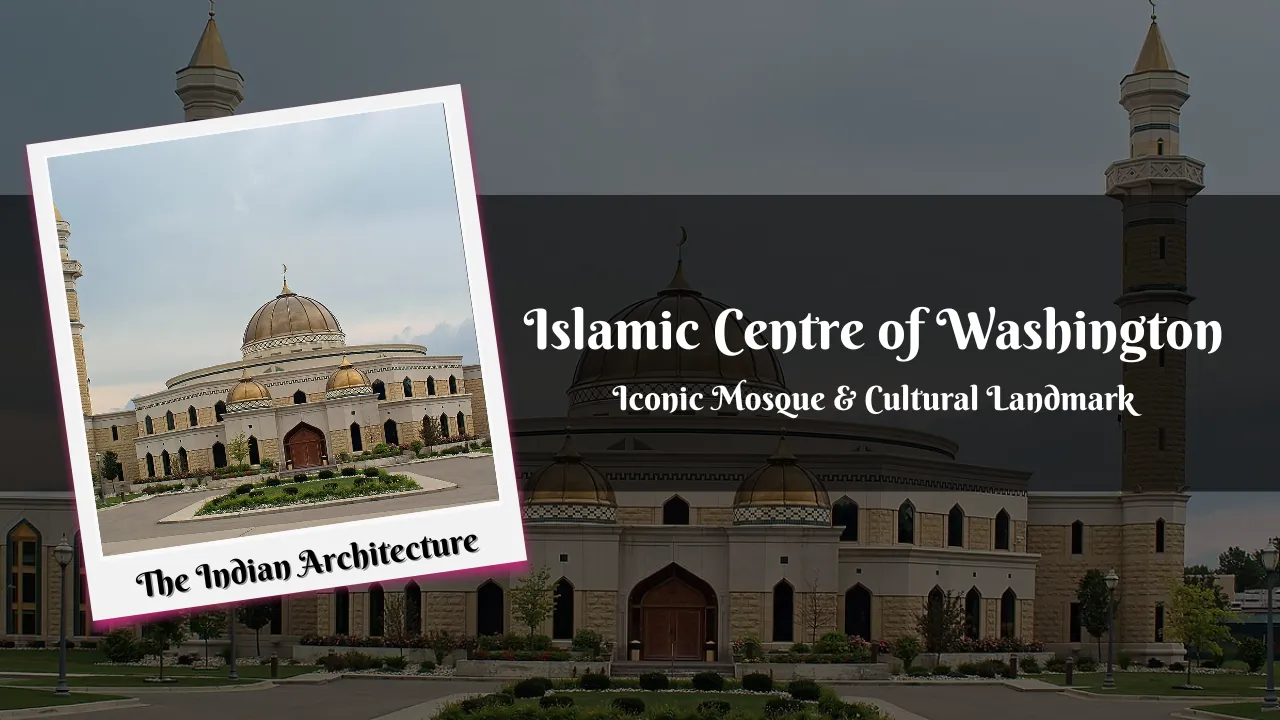
The Islamic Centre of Washington DC, is welcome to take part in a live narrative of devotion and conversation. This is the monument not made of marble or granite — but of faith, unity, and timeless beauty. The building is situated in Washington’s Embassy Row district. It was the biggest mosque in the Western Hemisphere when it first opened in 1957. Let’s go into the details about the monuments of faith, unity and timeless beauty.
Islamic Center of Washington: Quick Facts
Here are the main facts of this mosque in one simple table, guys. I have taken them from the official website of the Center, Wikipedia and the Society of Architectural Historians.
| Detail | Information |
|---|---|
| Address | 2551 Massachusetts Ave NW, Washington, DC 20008 |
| Area | Embassy Row, just east of the Rock Creek bridge |
| Architect | Mario Rossi (Italian architect) |
| Style | Neo-Mamluk (Mamluk Revival) |
| Land bought | April 30, 1946 |
| Cornerstone laid | January 11, 1949 |
| Building completed | 1954 |
| Dedicated | June 28, 1957, by President Dwight D. Eisenhower |
| Minaret height | 160 feet (49 m) |
| Gifts from abroad | Bronze chandelier (Egypt), tiles (Turkey), Persian rugs (Iran) |
| Courtyard mosaics | Blue and gold, by the John Joseph Earley Studio (1953) |
| Managed by | A board of governors made up of ambassadors |
| Phone | (202) 332-8343 |
| Website | theislamiccenter.us |
If you ask me, the most interesting thing in this table is the dates. The land was bought in 1946 but the mosque opened only in 1957. So it took more then 10 years to complete this dream.
How the Idea of This Mosque Was Born
This mosque was born from a sad moment in 1944. In November 1944, the Turkish ambassador to the USA, Münir Ertegün, died in Washington. At that time there was no mosque in the city where his funeral could be held.
His body was later taken back to Istanbul on the famous battleship USS Missouri in April 1946. Honestly guys, I think this story really shows how much the Muslims of Washington needed their own place of worship.
As per the official website, the idea was born in November 1944 in a talk between Mr. M. Abu Al Hawa and the Egyptian Ambassador Mahmood Hassan Pasha. Soon a few diplomats and American Muslims formed the Washington Mosque Foundation. They collected enough money to buy the land on Embassy Row.
Here is one small cute fact which I found. When the work started at the site in 1948, Abu Al Hawa (also known as Howar) placed a silver dollar on the ground for good luck. I really like these small human stories behind big buildings.
One more fun fact for you. Two sons of Münir Ertegün, Ahmet and Nesuhi, later became the brothers behind the famous Atlantic Records music label. Small world, right?
Architecture – A Masterpiece in Neo-Mamluk Style:
The first significant congregational mosque constructed in America is the Islamic Center in Washington, D.C. The mosque features a stunning “neo-Mamluk” architecture that was influenced by the magnificence of Egypt in the 15th century. It was designed by Italian architect Mario Rossi, who had previously given the works of art of a similar type of construction in Cairo and Alexandria. The site was purchased in 1946, the cornerstone was laid in 1949, and construction was completed by 1954. The Islamic Centre is located in the center of Washington’s renowned Embassy Row. President Dwight D. Eisenhower declared that the Islamic Center is part of the spirit of the country and it is America’s commitment to religious freedom at its dedication ceremony on June 28, 1957. You are immediately drawn in by the eye-catching minaret, vibrant mosaics, and detailed calligraphy.
Who Was Mario Rossi? Some Extra Facts
Mario Rossi was much more then just the architect of this mosque. I did some extra research on him, guys, and honestly I found some really interesting things.
He was born in Rome in 1897 and moved to Egypt in 1921. In 1929 he became the chief architect of the Waqf Administration there and designed many mosques, mostly in Alexandria. In 1946 he converted to Islam, and from 1954 to 1960 he even worked on the decoration of Masjid al-Haram in Mecca.
His most famous work is the Abu al-Abbas al-Mursi Mosque in Alexandria. Here is the best part. This Alexandria mosque later inspired the huge Sheikh Zayed Grand Mosque in Abu Dhabi, and I think that is really cool.
As per the Society of Architectural Historians, the Egyptian Ministry of Works and a local firm, Irwin S. Porter and Sons, are also credited for this building (1949–1957).
The inside of Islamic Centre:
The mosque has a three iwan hall with a double riwaq arcade around it. It is slightly tilted to face the qibla and has an elevated dome on top that combines traditional Mamluk architecture with Washington’s. The mosque is a colorful cultural mosaic, with Turkish tilework decorating the walls and mihrab, Egyptian chandeliers lighting the interior, and plush carpets from the Shah of Iran covering the floors.
Beyond the prayer hall, there are schools, a library, and gardens with flags of the Islamic countries of the world flying over them, symbolizing unity, diversity, and the enduring spirit of community. Courses on Islam and the Arabic language are taught into the classrooms. The Historic American Buildings Survey has listed and preserved the structure.
Gifts From Different Muslim Countries
This mosque was not made by only one country, and this is the part which I like the most. Many countries joined hands and sent their best things and their best artists. Here is who gave what, as per the official history of the Center and the Society of Architectural Historians:
| Who | What They Gave |
|---|---|
| Egypt | A bronze chandelier, and experts who wrote the Qur’anic verses on the walls and ceiling |
| Turkey | Tiles, and the experts to install them |
| Iran | Persian rugs, which are still in the mosque today |
| Mario Rossi (Italian architect) | The design of the building |
| John Joseph Earley Studio (USA) | Blue and gold mosaics of the courtyard, made in 1953 |
John Joseph Earley was an American artist who invented a way to make colourful mosaic concrete, and his work is seen in many Washington buildings. I think this mix of Egyptian, Turkish, Iranian, Italian and American hands is the real reason why people call this place a symbol of unity.
If you love tile work, also check my blog on Masjid-i Shaykh Lutfallah in Iran. The tiles of that mosque are on another level.
Beyond a Mosque: A space of Peace and Harmony
The Islamic Center of Washington is a vibrant community center in addition to being a mosque. For daily and Friday prayers, people from all walks of life are invited. To develop understanding across many cultures and religions, the Center also holds interfaith lectures, seminars, and discussions. To educate the next generation, it provides Quranic lessons and Arabic language programs. Special events like Eid, Ramadan, and other Islamic festivals transform the Center into a happy space where people gather and celebrate.
The location – A Gem in the Center of Washington, D.C.:
At 2551 Massachusetts Avenue NW, Washington, D.C. 20008, the Islamic Center of Washington can be found in the center of the city’s wealthy Embassy Row neighborhood. The Center’s conspicuous location, just east of the Rock Creek bridge, places it in the middle of a center for cross-cultural and international diplomacy.
Echoes of Unity: The Islamic Center’s Spirit and Message
The Islamic Center of Washington, which reflects the rich history of Muslims in America, is a symbol of hope and peace today. It serves as a reminder that whatever the differences in our cultures and religions, we are all united by our common humanity. The Center invites everyone, whether they come to pray, learn, take in its stunning architecture, or just enjoy a bit of solitude. This location highlights the things that genuinely connect us in a world that frequently highlights variations: faith, peace, and community.
Important Moments in the History of Islamic Center
This mosque has seen happy days and some very tough days in almost 70 years. I have put the main events in one simple timeline for you.
| Date | What Happened |
|---|---|
| November 1944 | Turkish Ambassador Münir Ertegün dies, and the idea of a mosque is born |
| April 30, 1946 | Land is bought on Massachusetts Avenue |
| January 11, 1949 | Cornerstone is laid |
| 1953 | Courtyard mosaics are made by the John Joseph Earley Studio |
| 1954 | Building is completed |
| June 28, 1957 | President Eisenhower dedicates the Center |
| March 9–11, 1977 | Hanafi Siege: gunmen take hostages in 3 DC buildings, including this mosque |
| September 17, 2001 | President George W. Bush gives his “Islam is Peace” speech here |
| December 5, 2002 | Bush visits again to mark Eid al-Fitr |
| June 27, 2007 | Bush rededicates the Center on its 50th anniversary |
The 1977 Hanafi Siege
This is the saddest chapter of this mosque, guys. On March 9, 1977, twelve gunmen of the Hanafi Movement took over three buildings in Washington, and the Islamic Center was one of them. Three of them entered the mosque and took eleven people as hostages.
In total 149 people were held in the three buildings. A radio journalist, Maurice Williams, was killed at the District Building, and a police officer there was badly wounded and died later. After a 39-hour standoff, the gunmen finally surrendered.
What touched me the most is that three Muslim ambassadors, from Egypt, Pakistan and Iran, helped to end this crisis. They read the Quran with the leader of the group to appeal to his conscience. You can read the full story of the 1977 siege on Wikipedia.
Visits by US Presidents
Several US presidents have visited this Center. I already told you about Eisenhower above, but one line from his speech really stayed with me. He said that in American hearts this place of worship is “just as welcome as could be a similar edifice of any other religion.”
Just six days after the 9/11 attacks, on September 17, 2001, President George W. Bush came here. He gave his famous “Islam is Peace” speech from this Center. He told Americans that the terrorists do not represent the true faith of Islam, and that Muslim Americans must be treated with respect.
Bush came back on December 5, 2002 to mark Eid al-Fitr, and the White House noted that worshippers from 75 different nations pray here. On June 27, 2007, he came again to rededicate the Center on its 50th anniversary. In that speech he quoted the poet Rumi: “The lamps are different, but the light is the same.”
Honestly guys, I think this one line explains this whole mosque. If you want the full list of such visits, the White House Historical Association has a nice page on it.
Islamic Center Minaret vs Qutb Minar: A Small Comparison
Our Qutb Minar in Delhi is around 23 m taller than the minaret of the Islamic Center. Since this is The Indian Architecture, I could not stop myself from comparing these two towers. Have a look at this table:
| Feature | Islamic Center Minaret | Qutb Minar |
|---|---|---|
| Location | Washington, D.C., USA | Delhi, India |
| Height | 160 ft (49 m) | 72.5 m (238 ft) |
| Built in | 1949–1957 | Early 13th century |
| Style | Neo-Mamluk (inspired by Egypt) | Indo-Islamic |
| What it is today | Minaret of a working mosque | UNESCO World Heritage Site (since 1993) |
As per UNESCO, the red sandstone Qutb Minar is 72.5 m high. But honestly guys, for me it is not about who is taller. In my eyes both towers tell the same story of Islamic architecture, one in Asia and one in America.
If you want to know more, read my full blog on Qutb Minar. You can also explore more such buildings in our Islamic Architecture section.
Tips If You Are Planning to Visit
The mosque is open to all, from before dawn till after the night prayer. If you are going to Washington, D.C., I will say don’t miss this place. Here are some simple tips from my side:
- Timings: As per the official website, the mosque opens 30 minutes before the Fajr (dawn) prayer and stays open till one hour after the Isha (night) prayer. The office work starts at 10 am.
- Prayer times: Prayer times change with the season, so check the prayer times page before you go.
- Friday prayer: Right now the website shows the Jumu’ah prayer at 1:30 PM, but check it again before you go. As per AAA, around 6,000 people come for Friday prayer, so for sightseeing I think another day is better.
- How to reach: The nearest Metro station is Dupont Circle on the Red Line (IslamiCity). From there it is around 10 to 15 minutes walk.
- What to wear: I will suggest you to wear modest clothes. Ladies can carry a scarf to cover the head, and be ready to take off your shoes in the prayer area, like in most mosques.
- Be respectful: Keep your voice low and don’t click photos of people while they are praying.
- Contact: For any question, you can call the Center at (202) 332-8343.
While walking here, you will also see many embassies and big old mansions. This area is very close to the posh Kalorama neighbourhood, where former President Barack Obama has his Washington house. I have written a full blog on where does Obama live, you can read it too.
Also guys, if you are in the DC area, you can visit the Dar Al-Hijrah Islamic Center in Virginia. It is another big mosque and community hub near Washington.
FAQs About Islamic Center of Washington
Who designed the Islamic Center of Washington?
It was designed by Mario Rossi, an Italian architect who had already designed many mosques in Egypt.
When did the Islamic Center of Washington open?
The building was completed in 1954, and President Dwight D. Eisenhower dedicated it on June 28, 1957.
How tall is the minaret of the Islamic Center of Washington?
The minaret is 160 feet (49 m) tall. It is one of the few things that stand out in the green skyline of Washington.
Can non-Muslims visit the Islamic Center of Washington?
Yes. The Center welcomes visitors who want to learn about Islam. Just dress modestly and try to avoid the busy prayer times.
Why is the Islamic Center of Washington famous?
When it opened in 1957, it was the largest mosque in the Western Hemisphere. It is also famous for its neo-Mamluk design, the gifts from many Muslim countries, and the visits by US presidents.
Final Words
So guys, this was all about the Islamic Center of Washington. I have tried to cover its history, architecture, the gifts from different countries, its important moments and some visiting tips. If you ask me, this mosque is a great example of how different countries can come together and make something beautiful.
And if you like reading about mosques in America, also check my blog on the Islamic Association of North Texas. Keep on visiting The Indian Architecture for more such info.
Also Read:
- Dar Al-Hijrah Islamic Center | A Leading Mosque & Community Hub in Virginia
- Islamic Association of North Texas
- Masjid-i Shaykh Lutfallah | History, Architecture & Visitor Guide
- Qutb Minar – History, Architecture & Facts | Iconic Delhi Monument
- Citadel of Aleppo – History, Architecture & Travel Guide
Sources:
- The Islamic Center – Official Website
- Islamic Center of Washington – Wikipedia
- Remarks at Ceremonies Opening the Islamic Center (1957) – The American Presidency Project
- “Islam is Peace” Says President (2001) – George W. Bush White House Archives
- Islamic Center – SAH Archipedia
- 1977 Hanafi Siege – Wikipedia
- Qutb Minar and its Monuments, Delhi – UNESCO
Last Updated: October 20, 2026