
Vishwa Shanti Stupa – Peace Pagoda & Buddhist Monument in India
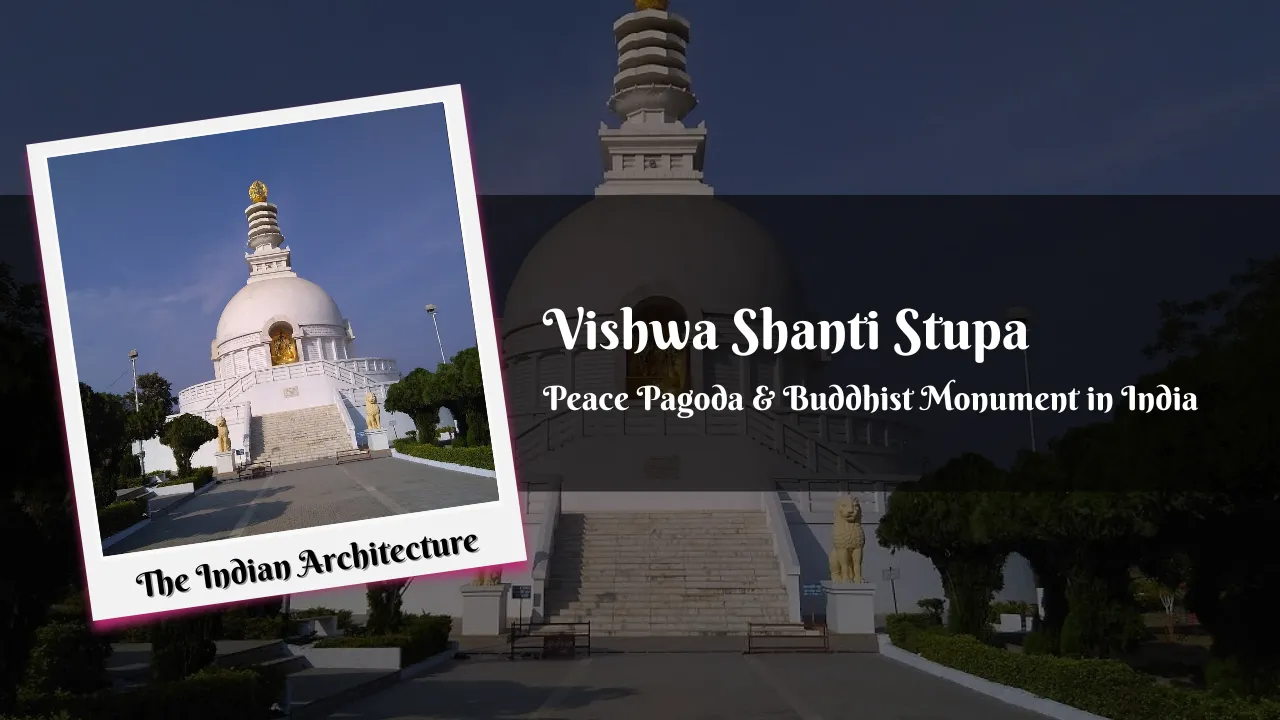
Hello guys, welcome back to my blog. Have you ever seen a big white stupa with shining golden statues of Lord Buddha on it? That is the Vishwa Shanti Stupa, and its name simply means “World Peace Stupa”. Today I am going to tell you about its history, why it was built, its architecture, and how you can visit it. So let’s start.
What is the Vishwa Shanti Stupa?
The Vishwa Shanti Stupa is a large white Peace Pagoda on Ratnagiri Hill in Rajgir, in the Nalanda district of Bihar, as per Wikipedia. It has four golden statues of Lord Buddha facing four directions, and next to it there is a small Japanese temple where prayers for world peace are done. Many people also call it the “Japanese Stupa”, because it was built by a Japanese Buddhist order.
What is a Peace Pagoda?
A Peace Pagoda is a Buddhist stupa built to inspire peace and to bring together people of all races and religions. Most of them were built after World War II under the guidance of the Japanese monk Nichidatsu Fujii and his order, Nipponzan Myohoji, as per Wikipedia. The Rajgir stupa was the first Vishwa Shanti Stupa built in India, and it is also the most famous one. I like this idea a lot, because it is a monument made only for peace, not for any king or any war victory.
Quick Facts About the Vishwa Shanti Stupa
Here is a quick table so you can get the main idea in one look.
| Fact | Details |
|---|---|
| Other names | World Peace Stupa, Peace Pagoda, Japanese Stupa |
| Location | Ratnagiri Hill, Rajgir, Nalanda district, Bihar |
| Built by | Nipponzan Myohoji, led by Japanese monk Nichidatsu Fujii (Fujii Guruji) |
| Foundation stone | 1965, by President Dr. S. Radhakrishnan |
| Inaugurated | 1969, by President V.V. Giri |
| Height | 120 ft |
| Diameter | 103 ft |
| Special feature | Four golden Buddha statues |
| How to go up | Ropeway (chairlift or cabin) or on foot |
| Best time | October to February |
History of the Vishwa Shanti Stupa
Fujii Guruji and Mahatma Gandhi
The story starts with a Japanese Buddhist monk named Nichidatsu Fujii. In 1933 he met Mahatma Gandhi at the Wardha Ashram and stayed there for two months, as per Tricycle. When Fujii beat his hand drum and chanted “Namu Myoho Renge Kyo”, Gandhi joined him, and Gandhi gave him the name “Guruji”. That’s why people in India lovingly call him Fujii Guruji.
After Hiroshima and Nagasaki
The atomic bombings of Hiroshima and Nagasaki in 1945 changed his life’s mission, and sadly, the Hiroshima bombing happened on his 60th birthday. In 1947 he started building Peace Pagodas as shrines for world peace, and the first one was completed at Kumamoto in Japan in 1954, as per Wikipedia. As per Tricycle, the relics kept in that first pagoda were a gift from Indian Prime Minister Jawaharlal Nehru. By 2000, around 80 Peace Pagodas had been built around the world. Some websites say 800, but the real number is around 80.
Building the Stupa in Rajgir
In Rajgir, the foundation stone was laid in 1965 by President Dr. S. Radhakrishnan, and the stupa was inaugurated in 1969 by President V.V. Giri, which was also Gandhi’s birth centenary year. This is from a speech by President Ram Nath Kovind, who also said the stupa is the result of Fujii Guruji’s hard work and the fine work of the famous Buddhist architect and artist Upendra Maharathi. As per Wikipedia, it was constructed by Mackintosh Burn Limited, a construction company under the West Bengal government, and new work in 1993 gave it its present form.
50 Years and Beyond
On 25 October 2019, President Kovind came to Rajgir for the stupa’s Golden Jubilee, and more than 300 monks and devotees came from Japan, Thailand, Sri Lanka, Bhutan, Nepal, the US and other countries. Then on its 55th anniversary in 2024, Chief Minister Nitish Kumar opened a new tourist building near the ropeway with lifts, ramps, food, toilets and parking, as per Patna Press. I think it is nice to see that this place is still getting so much love after more than 50 years.
Architecture and the Golden Buddha Statues
The stupa is a big white dome that stands 120 ft tall, with a diameter of 103 ft, as per Wikipedia. It is made of white marble and concrete, as per the government’s Film Facilitation Office. When you come up by the ropeway, it first looks like a tiny white dot from below, and then suddenly it becomes this huge white monument in front of you.
Four Golden Buddha Statues
In four niches around the dome there are four golden statues of Lord Buddha, and each one shows an important stage of his life: his birth, his enlightenment, his preaching and his death, as per Lonely Planet. I think this is a very smart design, because when you walk around the stupa, you basically walk through the whole life of Buddha.
The Japanese Temple
Next to the stupa there is a small Japanese Buddhist temple of Nipponzan Myohoji. Here the monks pray for world peace, and you can hear the rhythmic sound of their drum beats and a big gong while you walk around.
Why White and Gold?
The plain white dome gives a feeling of calm and peace, and the golden statues look so beautiful against it, specially in the morning sun. If you ask me, the simple design is exactly what makes it so peaceful.
How to Go Up and Places to See Nearby
The Rajgir Ropeway
The easiest way to reach the stupa is the Rajgir Ropeway. As per BSTDC, the Bihar tourism corporation, it is the oldest ropeway in India, and it has two types: an open chairlift for one person and a cabin where 8 people can sit together. The ride takes around 7–8 minutes. Fun fact guys, the famous song “O Mere Raja” from the 1970 film Johny Mera Naam was shot on this single-seat ropeway and the stupa. If you like trekking, you can also walk up on foot.
Gridhakuta (Vulture’s Peak)
Just below the stupa is Gridhakuta, also called Vulture’s Peak, which was Lord Buddha’s favourite retreat in Rajgir. As per Buddhist tradition, he gave many sermons here, including the Lotus Sutra and the Heart Sutra, as per Wikipedia. From the stupa you can walk down a stairway to reach it. Many websites mix up the two, but the stupa is on Ratnagiri Hill, and Gridhakuta is a separate peak next to it.
Other Places in Rajgir
- Venu Vana: The bamboo grove that King Bimbisara gifted to Lord Buddha.
- Saptaparni Cave: Believed to be the place of the First Buddhist Council after Buddha’s death.
- Hot Springs: Sacred warm springs, and the hottest one, Brahmakund, is around 45°C, as per BSTDC.
- Glass Bridge: Inside the Nature Safari, made with three layers of 15 mm glass, as per Incredible India.
- Rajgir Zoo Safari: Opened to the public on 16 February 2022, with tigers, lions, leopards and bears.
- Nalanda University Ruins: Only around 12 km away, so don’t miss it.
Honestly, I think one full day is not enough for Rajgir, so plan at least two days.
Some Interesting Facts
- The dedication of the Rajgir stupa in 1969 matched the 100th birth anniversary of Mahatma Gandhi, as per Wikipedia.
- The first Peace Pagoda in Kumamoto, Japan, was built with simple hand tools and took seven years to complete.
- The Nipponzan Myohoji order is actually very small, with only around 1,500 members, but its Peace Pagodas are famous all over the world, as per Japan Experience.
- Gandhi liked the drum and chanting so much that he made it part of the Wardha Ashram prayers, and as per Tricycle, they still do it there today.
- India has other Peace Pagodas too, like the Dhauli Shanti Stupa in Odisha (inaugurated on 8 November 1972) and the Vishwa Shanti Stupa in Vaishali (inaugurated on 23 October 1996).
I find it really beautiful that a friendship between a Japanese monk and Gandhiji led to so many peace monuments in India.
How to Reach, Timings and Best Time to Visit
The stupa is around 5 km south of Rajgir town, as per Lonely Planet.
- By Air: The nearest airport is Gaya, around 70 km away, but Patna airport, around 110–115 km away, has many more flights, as per Bihar Sports University, Rajgir.
- By Train: Rajgir has its own railway station, and as per the CRPF Rajgir page, train no. 12391/12392 runs daily between New Delhi and Rajgir via Lucknow, Varanasi and Patna.
- By Road: Rajgir is around 12 km from Nalanda, 25 km from Bihar Sharif, 78 km from Gaya and 110 km from Patna.
Timings and Tickets
As per BSTDC, the ropeway runs from around 8 AM to 5 PM, and you can also book tickets online. Recent visitors on Wanderlog mention a return ticket of around ₹80–120 and a lunch break around 12–2 PM. The Film Facilitation Office page also mentions that the ropeway is closed on Thursdays, so please check the latest timings before you go.
Best Time to Visit
October to February is the best time because the weather is pleasant, as per Bajaj Finserv. From March to June it can get very hot.
Some Simple Tips
- Go early in the morning to avoid the crowd at the ropeway, as BSTDC also suggests.
- Carry an ID proof and a water bottle.
- After the stupa, walk down to Gridhakuta instead of taking the ropeway straight back.
- Keep your voice low near the Japanese temple and respect the monks’ prayers.
FAQs
Who built the Vishwa Shanti Stupa in Rajgir?
It was built by the Japanese Buddhist order Nipponzan Myohoji, led by the monk Nichidatsu Fujii (Fujii Guruji). It was inaugurated in 1969 by President V.V. Giri.
How tall is the Vishwa Shanti Stupa?
The stupa is 120 ft tall, and its diameter is 103 ft.
How can I reach the top of the stupa?
You can take the Rajgir Ropeway, either the single-seat chairlift or the 8-person cabin, or you can walk up on foot.
Is the Vishwa Shanti Stupa the same as Gridhakuta?
No. The stupa is on Ratnagiri Hill, and Gridhakuta (Vulture’s Peak) is a separate peak just next to it, where Lord Buddha gave many sermons.
What do the four golden statues show?
They show four stages of Lord Buddha’s life: his birth, his enlightenment, his preaching and his death.
Final Words
So guys, this was all about the Vishwa Shanti Stupa of Rajgir, from the friendship of Fujii Guruji and Gandhiji to its golden Buddha statues and the old ropeway. I have tried to explain everything in simple words. For me, this stupa is a small reminder that peace is the biggest message any monument can give. Keep visiting The Indian Architecture for more such blogs.
Sources
- Vishwa Shanti Stupa, Rajgir – Wikipedia
- Peace Pagoda – Wikipedia
- Nipponzan-Myōhōji-Daisanga – Wikipedia
- Vulture Peak – Wikipedia
- Address at the Golden Jubilee of the Vishwa Shanti Stupa – President Ram Nath Kovind
- President addresses Golden Jubilee of Vishwa Shanti Stupa – Press release
- Current Affairs, 25 October 2019 – IAS Exam Portal
- Nichidatsu Fujii – Tricycle
- CM Nitish Kumar inaugurates integrated tourist facility near Vishwa Shanti Stupa – Patna Press
- Vishwa Shanti Stupa – Film Facilitation Office
- Vishwa Shanti Stupa – Lonely Planet
- Rajgir Ropeway – BSTDC
- Rajgir – BSTDC
- Rope Way Station Rajgir reviews – Wanderlog
- Hiroshima Peace Pagoda – Japan Experience
- Rajgir Glass Bridge – Incredible India
- About Rajgir Nature Safari – Rajgir Safari
- Places in and near Rajgir – IMA Karnataka
- How to Reach – Bihar Sports University, Rajgir
- Contact Us – CRPF RTC Rajgir
- Places to Visit in Rajgir – Bajaj Finserv
Facts checked on Oct 18, 2026.