
A Thousand Years and Beyond: India’s Architecture Carved in Stone
A thousand years ago, someone stood in front of an unfinished stone pillar and decided where to strike next. We probably won’t know their name. We may never know how they learned their art or how much they were paid. But somewhere in India, the pillar they carved might still be standing. People walk past it, stop to take pictures, or lean against it without thinking much about the hands and tools that shaped it.
That is one way architecture keeps a civilization within reach. A ruler’s name might be forgotten, but a staircase still exists to climb. A carved figure still catches the afternoon light. A thousand years from now, people might look at our surviving buildings in much the same way. Through these historical monuments, they can visualize how people lived in a bygone era.
Ellora Caves: The Engineering Behind Rock-Cut Architecture
At the Ellora Caves, that feeling comes with a question: How did the builders manage this?
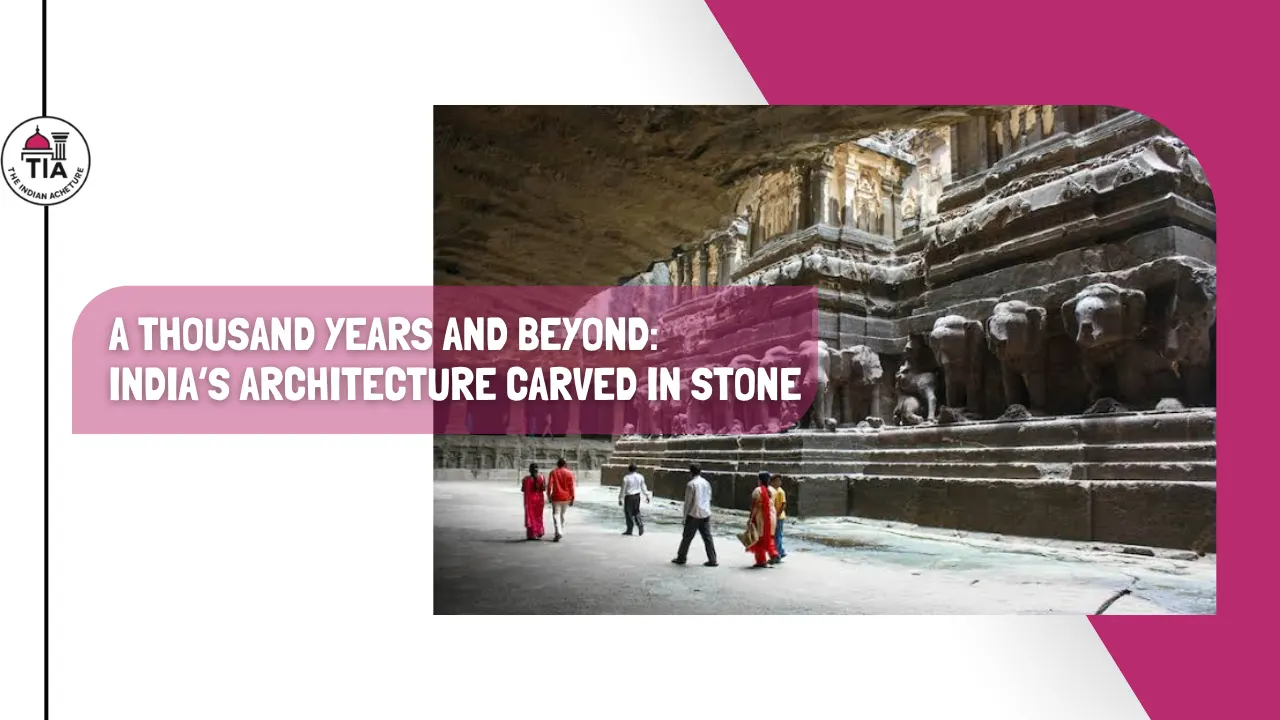
Buddhist, Hindu, and Jain monuments were cut into a basalt cliff, including the enormous Kailasa Temple. The builders cut away rock to create pillars, chambers, and sculptures. Looking at the result, it is easy to admire the finished form and forget that someone had to work out each stage of getting there.
The engineering deserves attention, but so does the purpose behind it. People gave their hard-earned time, labour, and resources to these places because they mattered. Their beliefs took physical form in the arrangement of a sculpture or chamber and the details of a carving. We cannot recover every thought behind those choices. Still, enough survives to make us curious about the people who made them.
Sree Padmanabhaswamy Temple: A Single Stone, Generations of Skill
My home city, Thiruvananthapuram, makes me think about the work hidden inside a familiar landmark. At the Sree Padmanabhaswamy Temple, the Ottakkal Mandapam was made from a single block of stone.
That detail makes me pause. Before anyone could admire it, people had to quarry the stone, move it, and work and carve it into place. I find that effort easier to connect with than the phrase “architectural heritage.”
The temple brings together Kerala and Dravidian styles, but it also holds evidence of people solving difficult problems with the resources and skills they had. The Kerala Tourism guide to Sree Padmanabhaswamy Temple offers more details about its architecture, stonework, and the Ottakkal Mandapam.
Vellore Fort: Architecture Beyond Its Original Purpose
Writing from Vellore, I find another example in Vellore Fort. Its massive granite walls and surrounding moat speak of a practical concern: keeping people out.
Yet inside are the Jalakanteswara Temple, a mosque, and a church. That combination interests me. A place built for defence also holds traces of worship and changing communities. It is a reminder that a building’s story can grow well beyond the purpose its first builders had in mind.
According to the Vellore District administration’s official guide, the fort contains both secular and religious structures and was built using massive cut-granite stones. Its history shows how architecture can preserve evidence of different periods, communities, and uses within a single place.
What Will India’s Monuments Tell Future Generations?
A thousand years from now, these buildings could help people understand what mattered to us. Temples might preserve stories about gods and the ways people worshipped. Forts could reveal how rulers defended territory and displayed power. Their scale might also raise questions about who paid for them, who worked on them, and whose names were left out.
They could remember India for its builders’ skill, too. A stone chamber at Ellora or a granite wall at Vellore gives a person something to examine. How was the weight supported? How were the individual pieces fitted? Even if the builders’ instructions or the methods used to construct a monument are lost, parts of their thinking remain in the work. A future student might ask the same questions I do now.
Beyond Monuments: The Architecture of Everyday Life
I hope they would also look beyond the biggest monuments. A well, a courtyard, or the layout of an old house could offer clues about everyday life: how people collected water, shared space, and dealt with the weather. These places might tell future generations something about families whose lives never appeared in royal inscriptions.
Ordinary buildings can reveal a different side of history. They can show how people adapted their homes to local climates, used available materials, and organised their communities. These details may seem small today, but they could become valuable evidence for people trying to understand our lives centuries from now.
Preserving the Past Without Losing Its Context
But we should be careful about the picture they inherit. A surviving palace does not mean everyone lived comfortably. A temple, mosque, and church within one fort do not explain every relationship between the communities that used them.
Buildings provide evidence; inscriptions, records, and local knowledge help people interpret it. Without that context, a future account of India could leave a great deal out.
This is why preserving architectural heritage involves more than protecting stone and mortar. It also means documenting the stories, traditions, and historical records connected to these places. Organisations such as UNESCO’s World Heritage Centre help bring international attention to the importance of protecting sites with outstanding cultural and historical value.
Conclusion: Leaving a Legacy Beyond Stone
We cannot decide exactly what people will remember a thousand years from now. We can give them a better chance of finding out. Caring for ordinary buildings as well as famous monuments, and keeping the stories attached to them, would leave a fuller record.
Perhaps someone will stop beside that pillar and wonder who made and carved it. I would like them to find more than a ruler’s name. I would like them to understand something of the skill, belief, and everyday effort that went into building this country.
Also Read: