
LSL vs LVL Lumber: Key Differences, Uses, and Cost Explained
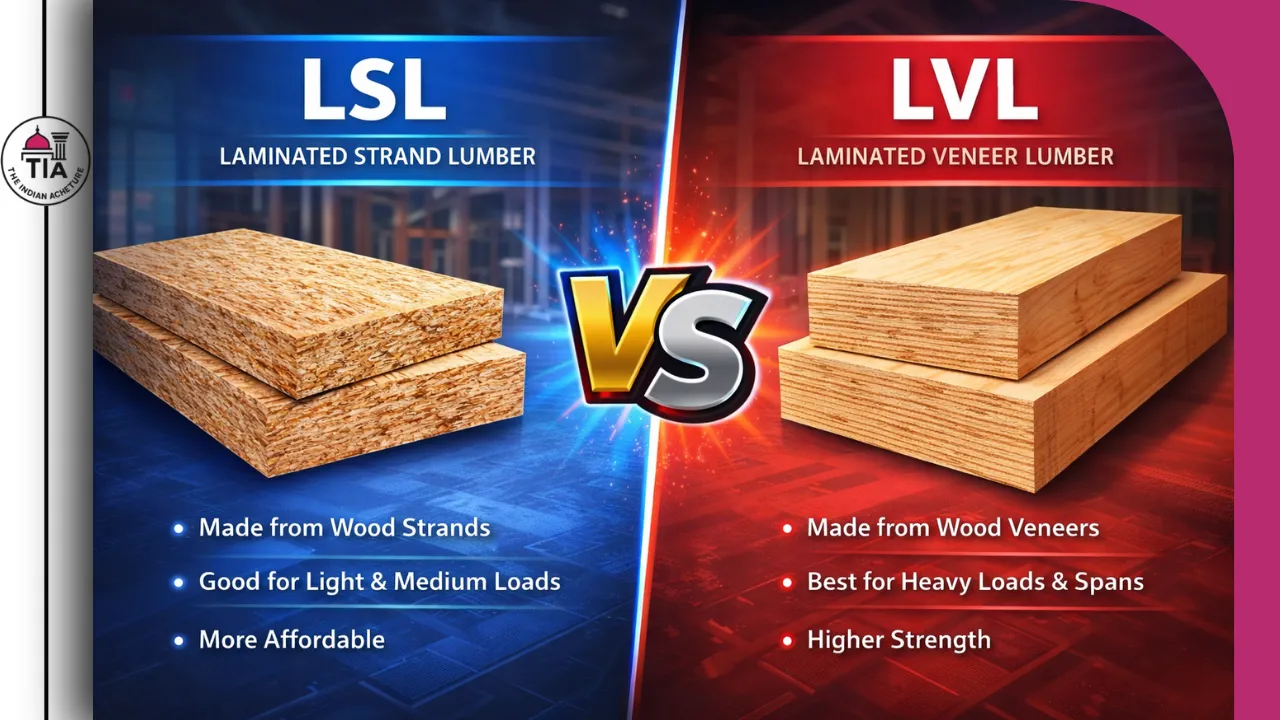
If we talk about modern construction, engineered wood products have become extremely popular and widely used materials. Two of the most commonly used options are LSL (laminated strand lumber) and LVL (laminated veneer lumber). At first glance, they may look very similar, but they serve slightly different purposes on a job site.
This blog will break down LSL versus LVL lumber in simple words so builders, contractors, and homeowners can choose the right materials for their projects.
What is LSL lumber?
LSL is made by bonding together long wood strands with resin under heat and extreme pressure. These strands are aligned mostly in the same direction, which gives LSL consistent strength and stability.
LSL is commonly used in:
- wall studs
- rim boards
- door and window headers
- light load beams
One of the biggest advantages of LSL is its uniformity. Unlike traditional lumber, it doesn’t warp, twist, or shrink very easily.
What is LVL lumber?
LVL is made by layering thin sheets of wood veneer together with strong adhesives. The grain of each layer usually runs in the same direction, making LVL extremely strong.
LVL is often used in:
- load-bearing beams
- floor headers
- roof beams
- garage door headers
LVL is mostly known for its high strength-to-weight ratio, which makes it ideal for carrying heavy loads over long spans.
LSL vs LVL Lumber Comparison Table
| Feature | LSL Lumber | LVL Lumber |
|---|---|---|
| Full Name | Laminated Strand Lumber | Laminated Veneer Lumber |
| Manufacturing | Wood strands bonded together | Thin wood veneers layered |
| Strength | Moderate to high | Very high |
| Load Capacity | Suitable for light to medium loads | Ideal for heavy loads |
| Cost | Lower | Higher |
| Common Uses | Studs, rim boards, headers | Beams, floor and roof supports |
| Workability | Easier to cut and nail | Heavier and denser |
| Stability | Very stable | Extremely stable |
The key difference between LSL and LVL
Even though both are engineered lumber products, their structure and performance differ in important ways.
Strength and load capacity
LVL is generally stronger compared to LSL, especially for long spans and heavy loads. That’s why LVL is commonly used for major structural beams.
LSL is also strong, but it is better suited for shorter spans and lighter structural applications.
Cost
LSL is usually more affordable compared to LVL. This makes it a good choice for projects where extreme strength isn’t required, but consistency is important.
LVL costs more due to its higher load-bearing capacity and manufacturing process.
Workability
Generally, LSL is easier to cut, nail, and handle. It behaves more like traditional lumber. On the other hand, LVL is denser and heavier, which can make installation slightly more labor-intensive.
When should you use LSL?
LSL is the best choice when:
- straight and uniform studs are needed
- budget is a concern
- loads are moderate
- dimensional stability is more important than maximum strength
Some builders use LSL for interior framing because it saves time, reduces waste, and stays straight.
When should you use LVL?
LVL works best when:
- the structure needs to carry heavy loads
- long spans are required
- structural safety is a priority
- building codes demand high-strength materials
It is commonly found in floor systems, roof beams, and large openings.
Final thoughts
Choosing between LSL vs LVL lumber depends entirely on the project’s structural needs and budget.
- LSL works best for light to medium structural uses and general framing
- LVL is ideal for high-load applications where strength is crucial
Both materials outperform traditional lumber in consistency and reliability, which makes them essential components of modern construction.
Also Read: