
Cathedral Ceiling Trusses: Design, Uses, Benefits & Limits
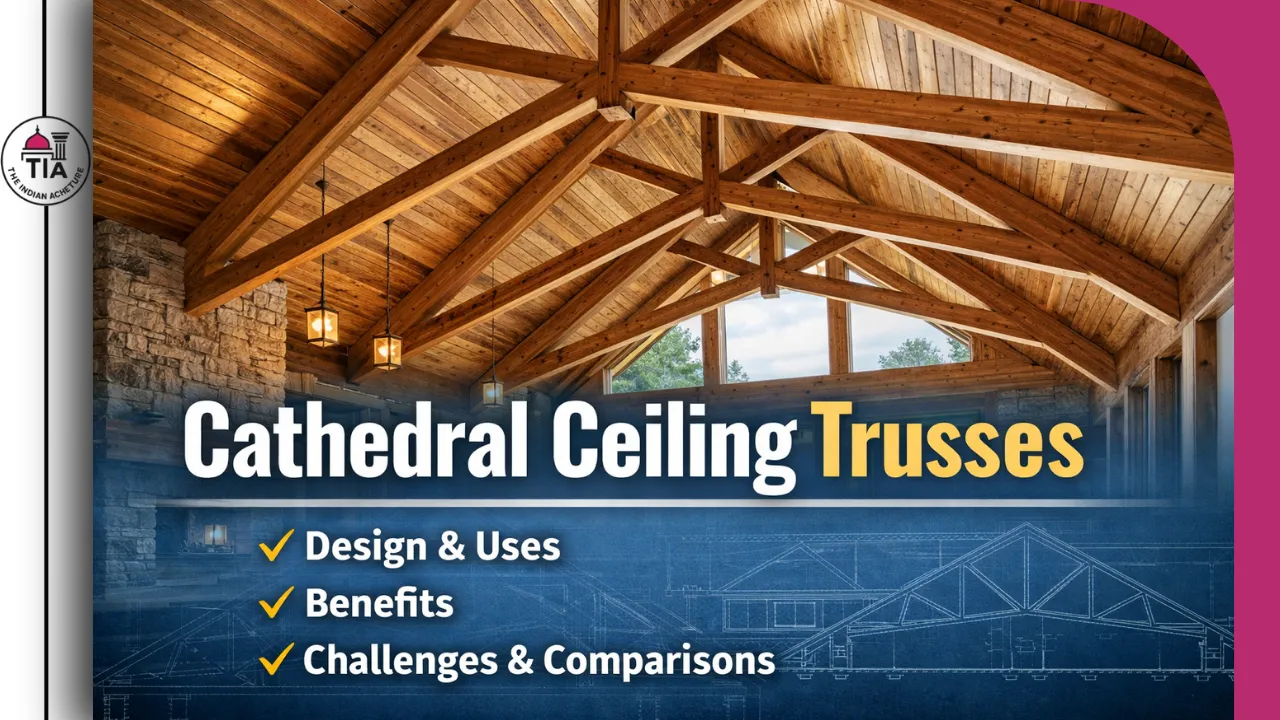
Cathedral ceiling trusses are a very popular structural solution that is used in homes and many commercial buildings where a high and open, airy ceiling is needed. Unlike flat ceilings, cathedral ceilings follow the slope of the roof, which creates a spacious interior look and feels bright with a dramatic vibe. To support this type of ceiling safely, specially engineered trusses are used.
This plan will explain what cathedral ceiling trusses are, how they work, the advantages and disadvantages, and how they compare with other roof framing options.
What are cathedral ceiling trusses?
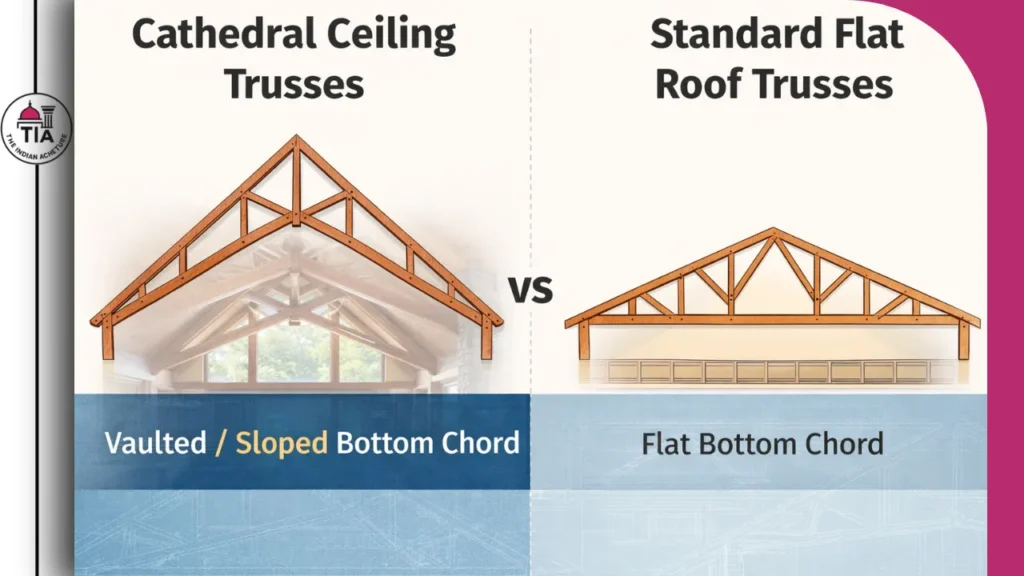
Well, cathedral ceiling trusses are prefabricated roof trusses that are designed to create vaulted or cathedral-style ceilings. In this type of design, the bottom chord of the truss is sloped instead of flat, matching the roof pitch. Now this allows the interior ceiling to rise upward, often meeting at the ridge point.
These are engineered outside and delivered ready for installation. Because they are factory-built, they offer consistent quality and precise dimensions.
Cathedral ceiling roof trusses are commonly used for:
- Residential houses
- Cabins and cottages
- Churches and halls
- Modern architecture designs where open interiors are needed
How cathedral ceiling trusses work?
Old traditional roof trusses have a horizontal bottom chord that creates a flat ceiling, while in cathedral ceiling truss design, the bottom chord is angled upward. The internal web members are arranged in such a way that they safely transfer roof loads into the exterior walls.
Since there is no attic space in most cathedral ceiling designs, insulation, ventilation, and lighting must be carefully planned during construction.
Key benefits of cathedral ceiling trusses
Cathedral ceiling trusses provide many practical and visual benefits such as:
- Open and spacious interiors: The sloped ceiling makes rooms feel a bit larger and less confined.
- Architectural appeal: These trusses enhance the overall design and add a premium look to the space that no one can deny.
- Factory precision: They are engineered and built in controlled conditions, which reduces on-site errors.
- Fast installation: If we compare it to stick framing, trusses can be installed more quickly.
- Design flexibility: Cathedral ceiling truss design can be adapted to various roof pitches and spans.
Most common challenges and limitations of cathedral ceiling trusses
Despite all the above advantages, cathedral ceiling roof trusses also come with some challenges. These challenges include:
- High cost – Cathedral ceiling trusses are generally more expensive compared to standard flat trusses.
- Limited attic storage – Sometimes the vaulted design eliminates usable attic space.
- Insulation complexity – Proper insulation and ventilation are very critical and may require specialized solutions.
- Mechanical planning required – Running HVAC ducts, wiring, or plumbing needs careful coordination.
Cathedral ceiling trusses versus other roof framing options
Here is a simple comparison table to understand how cathedral ceiling trusses differ from other common framing methods:
| Feature | Cathedral Ceiling Trusses | Standard Roof Trusses | Stick Framing |
|---|
| Ceiling Style | Sloped / vaulted | Flat | Sloped or flat |
| Installation Speed | Fast | Very fast | Slower |
| Design Consistency | High (factory-built) | High | Depends on workmanship |
| Attic Space | Minimal or none | Good attic space | Can vary |
| Cost | Medium to high | Low to medium | Medium |
| Structural Engineering | Pre-engineered | Pre-engineered | On-site calculations |
Design considerations to keep in mind
When you plan for your cathedral ceiling truss design, a few important factors that you should consider are:
- Roof pitch and span length
- Local building codes and load requirements
- Insulation type with R-value
- Ventilation strategy to prevent moisture buildup
- Lighting placement and ceiling fans
Working with a qualified structural engineer or a truss manufacturer is very essential to make sure there is enough safety and performance.
Where cathedral ceiling trusses work the best?
Cathedral ceiling trusses are ideal for:
- Living rooms and great rooms
- Entry halls and lobbies
- Churches and community buildings
- Homes aiming for modern and rustic aesthetics
They are especially effective in areas where natural light and visual openness are the main focus.
Final thoughts
Cathedral ceiling trusses combine structural strength with visual impact, and there is no doubt in that. They make it possible to achieve beautiful vaulted ceilings without the complexity of traditional stick framing. While they require very careful planning and a slightly higher investment, the end result is very spacious and elegant.
Also Read: