
LVL vs Glulam: Key Differences, Uses, and Which Is Better
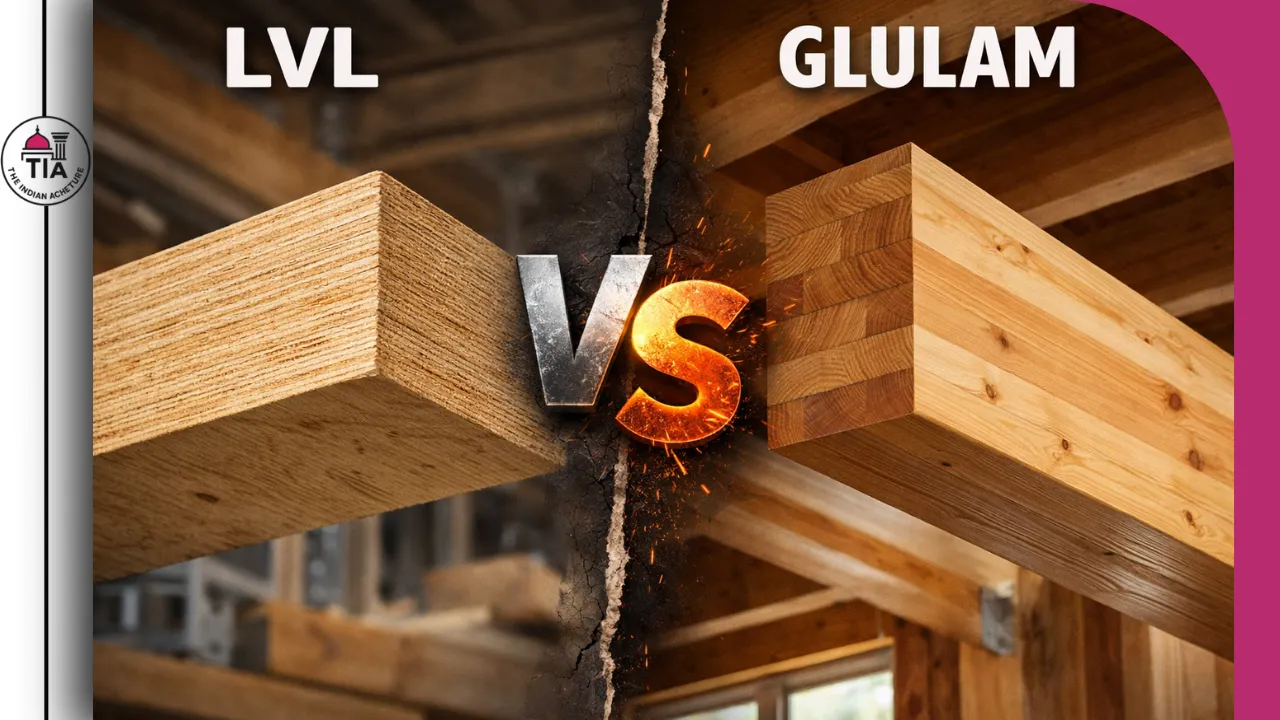
When we talk about modern construction, engineered wood products have changed the way buildings were designed and built. Two of the most commonly used engineered wood beams are LVL (laminated veneer lumber) and glulam (glued laminated timber).
At first glance, they look very similar to each other, but in reality, they are made differently and behave differently, and they are even used for different purposes. This blog will explain LVL vs Glulam in a simple way so that you can clearly understand which one suits your project the best!
What is LVL?
LVL is an engineered wood product made by bonding thin layers of wood veneers together using strong adhesives. All the veneers are laid in the same direction, which gives LVL its high strength and consistency.
It is manufactured under controlled conditions, and that is the reason why LVL is very uniform. Unlike solid wood, it doesn’t have knots, weak points, or natural defects that can reduce strength.
Common uses of LVL
- Beams and headers over doors and windows
- Floor joists and roof rafters
- Load-bearing structural members
- Hidden structural framing
LVL is mainly used where strength and reliability are more important than appearance.
What is Glulam?
Glulam is also an engineered wood product made by gluing together layers of solid lumber instead of thin veneers. These layers can be arranged to create straight beams or even curved and arched shapes.
Glulam stands out because it combines strength and visual appeal, which makes it suitable for exposed structures.
This is commonly used for:
- Exposed beams and columns
- Large open-space roofs
- Churches, halls, and commercial buildings
- Decorative and architectural structures
Glulam is often chosen when the structure is meant to be seen, not hidden.
LVL vs Glulam: Comparison Table
| Feature | LVL (Laminated Veneer Lumber) | Glulam (Glued Laminated Timber) |
|---|---|---|
| Raw material | Thin wood veneers | Solid lumber boards |
| Grain direction | All veneers aligned | Boards layered and bonded |
| Strength | Very high and consistent | High, suitable for long spans |
| Appearance | Plain, industrial look | Natural wood finish |
| Exposed use | Rarely used exposed | Commonly used exposed |
| Custom shapes | Mostly straight | Straight and curved options |
| Cost | Usually lower | Usually higher |
| Best for | Structural framing | Structural + architectural use |
The core difference between LVL and Glulam
Both materials are very strong, durable, and engineered for performance, but their differences matter when selecting the right choice.
Manufacturing process
- LVL uses thin wood veneers glued in one direction
- Glulam uses full lumber boards glued in layers
Strength and Load Capacity
LVL is generally stronger in bending and more predictable in performance, which makes it ideal for heavy structural loads. Glulam is also very strong, especially for long spans, but it focuses more on flexibility in shape and appearance.
Appearance
LVL has a layered industrial look and is usually not meant to be seen, while on the other hand, glulam has a natural wood appearance and is often used as a design feature.
Custom shapes
LVL is mostly straight and uniform, while glulam can be manufactured in curved, arched, or tapered shapes, making it more architecturally versatile.
Which one should you choose?
The choice between LVL and glulam depends on how and where the beams will be used.
You can go for LVL if:
- The beams will be hidden inside walls or ceilings
- Maximum strength is needed in a compact size
- Budget is a concern
- The project is residential or light commercial
You can go for Glulam if:
- The beams will be visible
- It is meant for design and aesthetic purposes
- Long spans or curved shapes are required
- The project is commercial, public, or architectural
Final thoughts
Both LVL and glulam are excellent engineered wood products, but they serve different purposes. LVL focuses more on strength and consistency with cost efficiency, which makes it ideal for hidden structural supports. On the other hand, glulam balances strength with beauty, making it perfect for exposed beams and architectural features.
Also Read: