
LVL vs PSL Parallam : Key Differences, Uses, and Cost Comparison
When it comes to modern construction and architecture, there is one choice that is becoming very popular day by day, and that is engineered wood, and all its products have become a go-to choice for builders, construction professionals, and many architects. Some of the most commonly used options are LVL (laminated veneer lumber) and Parallam (parallel strand lumber). Both are very strong, commonly reliable, and designed to replace traditional solid wood beams, but they differ from each other.
This blog will explain LVL versus Parallam in a simple way so you can clearly understand their differences, uses, pros, and limitations!
What is LVL?
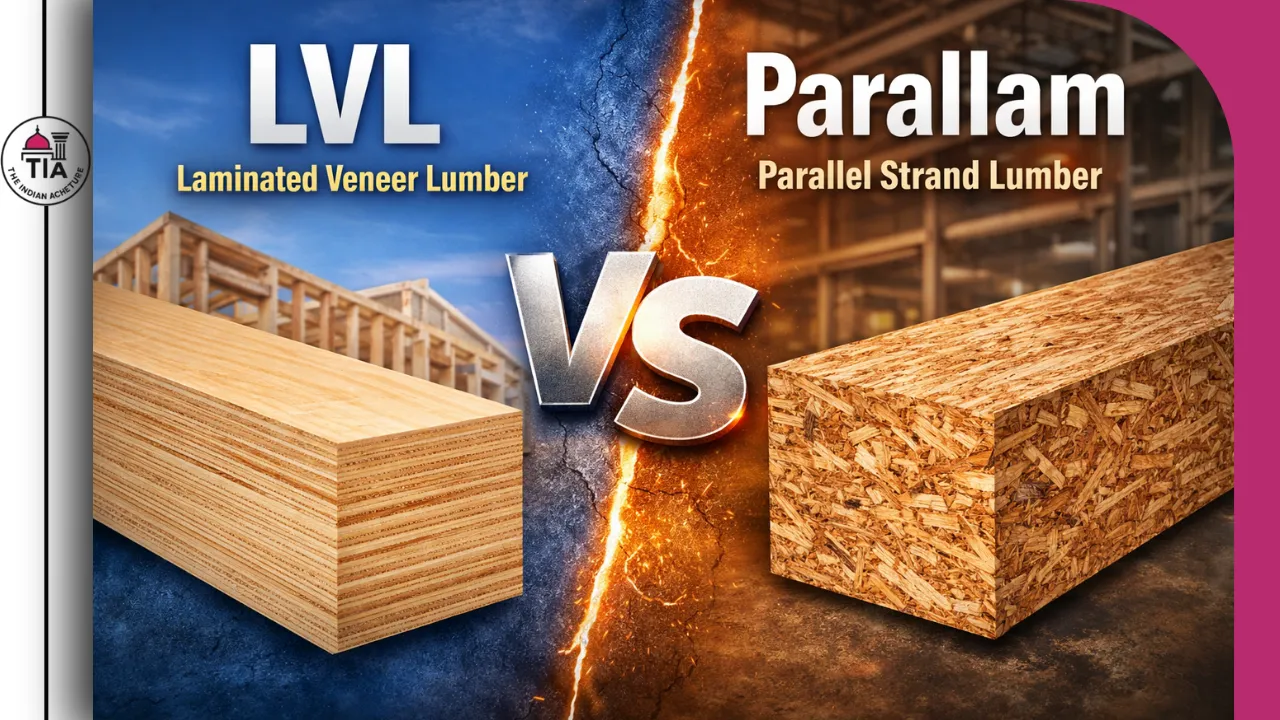
LVL is nothing but a product made by bonding thin layers of veneer wood layer by layer together with strong adhesives. All the veneers are placed in the same grain direction, and that gives LVL excellent strength and consistency.
LVL is commonly used in:
- Floor beams
- Roof rafters
- Headers above doors and windows
- Rim boards
This is widely used because it is factory-made; LVL has fewer defects compared to natural wood and performs consistently across long spans.
What is Parallam?
Parallam is a type of wood made from long wood strands instead of thin veneer. These long wood strands are aligned parallel to each other and bonded with resin under high pressure.
Parallam is known for its:
- High load-bearing capacity
- Ability to span long distances
- Strong structural performance
It is often used for:
- Large beams and columns
- Heavy residential and commercial projects
- Exposed structural applications
LVL vs Parallam: The Key Difference Explained!
Both the materials are really strong and engineered, but they are designed for slightly different purposes.
- LVL is mostly used for residential construction and is much easier to handle and cut.
- Parallam is heavier and stronger, which makes it a better choice for large loads and long spans.
- LVL usually has a smoother appearance, while Parallam has a visible strand structure.
- Parallam is often more expensive as compared to LVL.
LVL vs Parallam Comparison Table
| Feature | LVL (Laminated Veneer Lumber) | Parallam (PSL) |
|---|
| Material Type | Thin wood veneers | Long wood strands |
| Strength | High | Very high |
| Load Capacity | Moderate to high | Very high |
| Span Capability | Good | Excellent |
| Weight | Lighter | Heavier |
| Appearance | Smooth, layered | Textured, strand-like |
| Cost | More affordable | More expensive |
| Common Use | Headers, beams, rafters | Large beams, columns |
| Ease of Cutting | Easier | Harder due to density |
Which One Should You Go For?
The choice between LVL and PSL depends mainly on the project size and the structural requirements you have.
You can go for LVL if:
- The project is residential or light commercial
- You need beams for doors, windows, or flooring
- Low budget
- Easy handling and cutting is important
Choose Parallam if:
- The project requires heavy load support
- Long spans are needed without extra columns
- Structural strength is the top priority
- The beams may be left exposed
Cost Difference Between LVL and PSL
Generally:
- LVL is a more budget-friendly option and is widely available in the market
- Parallam costs more, mainly due to its high strength and manufacturing process
However, Parallam can sometimes reduce the need for additional supports, which may balance the higher upfront cost in larger projects.
Final Thoughts
Both LVL and Parallam are excellent choices, and neither is better in every situation.
- LVL is ideal for everyday structural needs, especially in houses
- Parallam is built for strength, long spans, and heavy loads
Understanding the difference between LVL and Parallam really helps in choosing the right material, avoiding overspending, and ensuring structural safety.
Also Read: